
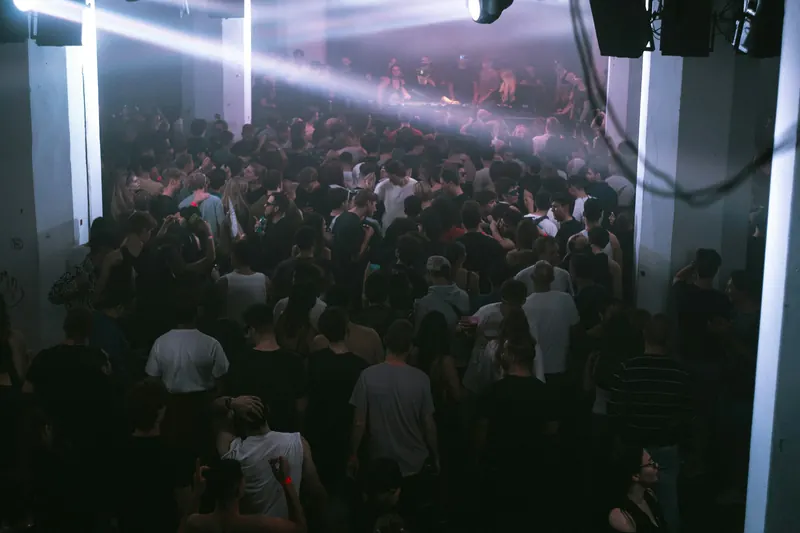
Reading a crowd means watching the whole room, not only the dancers in front of you, and changing one thing at a time when it tells you something. Look up between mixes, test a new direction with one track, pull back if it falls flat, and note what worked.
Where to look from the booth
"I believe the most important part of DJing is reading the crowd," Darius Syrossian told Mixmag Alps in August 2026. Know your gear well enough to keep your eyes up, then watch:
- The middle and the edges. The middle is your core: if it stops, something is wrong. The edges show if you are pulling people in. On a full floor, Phil Morse of Digital DJ Tips says to play to them: "What can you play to involve those who aren't dancing?"
- Feet as well as heads. Nodding heads mean people like a track. Moving feet mean they dance to it.
- The bar queue. A queue that grows during one track can mean people want a break. Colombian DJ Ciclo told Magnetic Magazine he even watches "how many people head to the bar for a shot in the middle of my set."
- Phones and voices. Filming or singing along means this is a moment. Scrolling on the floor means the opposite.
- The exits after a drop (where the full beat comes back). Walking off right after it means the track promised more than it delivered.
- The staff. "Staff in the venue can be a useful tool to you as a DJ," writes Toolroom's Danny Rhys. Bar staff bopping their heads early in the night is a good sign.
Watch the group, not one person: "People are individuals, but a crowd is a collective," DJ Mikey Four wrote on Digital DJ Tips.
Signs a track works or fails, and how fast to react
Good signs: a fuller floor than one track ago, hands up, eyes closed, people pulling friends from the bar. Bad signs, in the words of Teo Tormo for DJ TechTools: "arms crossed, hips stopped, people talking too much instead of dancing."
Don't panic when one person leaves: Tormo notes that most people wait a while for a change before they walk out. Give a new track a phrase or two (most dance music runs in blocks of 16 or 32 bars). If the floor keeps thinning, mix out at the next clean phrase. Two misses in a row? Tormo's advice: "forget about the rules" and mix into a safe floor filler.
Test with a probe track, then pull back
Want to go harder, deeper or somewhere else? Play one probe track that points the new way but keeps something that works: the tempo, the groove or the key. If the middle keeps moving and the edges move in, take the next step. If not, go back to what was working and try another probe later.
Morse says the same of a bold "hard reset": "The worst that can happen is that you get it wrong and have to return to the previous vibe."
Change direction smoothly
Change one thing at a time so the room follows:
- Tempo. A few BPM (beats per minute) per track, not a leap.
- Energy. One step up or down. After a long peak, a tired floor needs a breather.
- Vocal or instrumental. A vocal after a run of instrumentals can wake a room at the same tempo.
- Familiar or new. A track people know buys you the trust to play one they do not.
Mixing in key smooths every step: see harmonic mixing and the Camelot wheel. Keep three or four rescue tracks ready too; when a track is not working, Ciclo sometimes plays a classic "to reconnect with the crowd."
That takes more music than you will play, at several energy levels. In a Digger Digger style crate, every track shows how many recorded DJ sets it was found in. "Show Me Love" by Robin S, found in 820 recorded DJ sets in our House & Disco crate as of October 2026, is a safe crowd-pleaser; a track found in a handful of sets is a deeper pick for when the room trusts you. How to prepare a DJ set explains how much to pack.
Filling up, emptying and the time of night
"What the room needs at 1 a.m. can be very different from what it needs at 4 a.m.," says Ciclo. While the room fills, play to the few who dance and stay below the peak (opening? read what to play when you open for a big DJ). When it is full, push and take risks. When it empties, play for those who stayed; late in a long night, Morse writes, lowering the energy can bring smiles back. How to close a DJ set covers the last tracks.
Requests: how to answer kindly
A request is information: if several people ask for the same kind of music, the room is telling you something. Whatever you answer, be kind.
- Never promise. Tormo: "Never give a definitive 'yes' even if you are going to play the request." Try "I'll see if it fits later."
- Not right away. Fit it in later, where it makes sense.
- Use your filter. Morse warns that some people request music they like but will not dance to. If it would clear the floor, thank them and let it go.
Different crowds, different signs
Club. People came to dance, so the floor is your main signal and you can lead it furthest.
Wedding or private party. Several generations, and music is not why they came. In a wedding guide, Morse cites DJ Mike Walter: some guests never dance, some always do, and the ones in between are your job. Ask the hosts for their must-plays and do-not-plays, rotate blocks of about 15 minutes per style so every age gets a turn, and if a "party starter" fails, back off for 15 to 20 minutes before trying another.
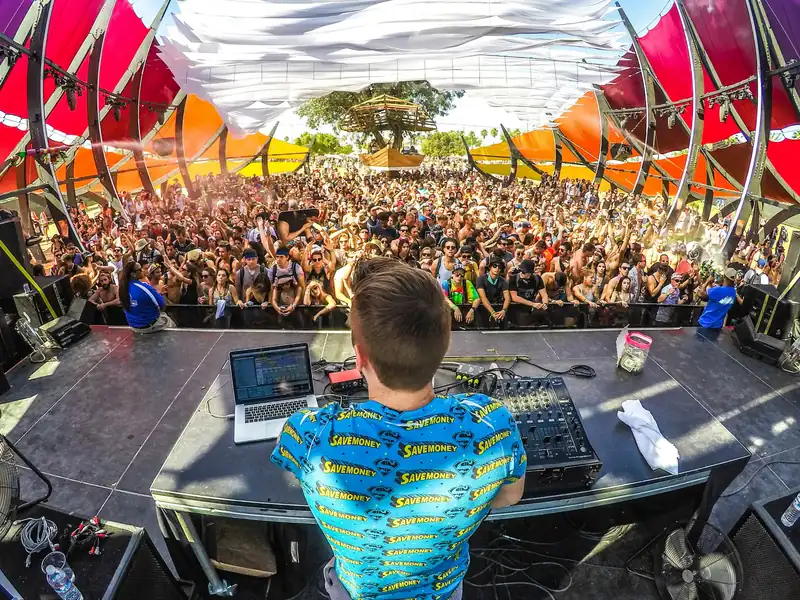
Festival. A huge crowd, some of it waiting for the next act. Watch the front rows, how far back the movement reaches, and whether people drift toward your stage or away. More in festival set vs club set.
Bar or restaurant. Nobody may look at you. Adam Douglas wrote for Gearnews about playing downtempo records to diners and still feeling the energy shift when a record connected. Listen to the talk: livelier is good; people leaning in to hear each other means too loud.
Keep notes after the gig
The next day, open your DJ app's history of played tracks and mark what filled the floor (and when), what emptied it, the probes that worked, the requests and who came. After a bad night, Tormo suggests asking whether the songs were right for that place, that audience and that event. A few gigs later, your notes will teach you more than any guide.
Open all styles, play the 30-second previews and save tracks at several energy levels with the + button, from crowd-pleasers found in hundreds of sets to deeper picks.
Sources: DJ TechTools, Digital DJ Tips, Mixmag Alps, Magnetic Magazine, Toolroom Academy.