
Wear earplugs made for music every time you play, keep the monitors and your headphones as low as you can, and give your ears quiet time after a gig. Hearing damage builds up slowly and does not heal, and tinnitus can stay for life. Here is how loud is too loud, with official figures, and the habits DJs with tinnitus wish they had started sooner.
Why DJs are at risk
You stand next to the monitors for hours, often several nights a week, with headphones on top. The UK's Health and Safety Executive (HSE), in its guide Sound advice, lists typical exposure for DJs in clubs at 93 to 99 dB. It also notes that most headphones give little or no protection from the noise around you, so your cue plays on top of the room.
How loud is too loud
Sound is measured in decibels (dB), often shown as dBA (weighted to match how the ear hears). The scale climbs fast: 10 dB louder is ten times more intense. The US National Institute for Occupational Safety and Health (NIOSH) recommends a workplace limit of 85 dBA averaged over 8 hours, and every 3 dB louder halves the safe time:
| Average level | Safe time per day (NIOSH) |
|---|---|
| 85 dBA | 8 hours |
| 88 dBA | 4 hours |
| 91 dBA | 2 hours |
| 94 dBA | 1 hour |
| 97 dBA | 30 minutes |
| 100 dBA | 15 minutes |
Compare that with HSE's 93 to 99 dB for DJs: most sets last longer than the safe time. The World Health Organization (WHO) counts per week: 80 dB is safe for 40 hours a week, 90 dB for 4 hours, 100 dB for 20 minutes. Its 2022 global standard for safe listening venues and events caps the average at 100 dB over 15 minutes (written 100 dB LAeq, 15 min) and asks venues to offer hearing protection and quiet zones. That cap is a ceiling for the crowd, not a safe level for someone in the booth all night.
Tinnitus and hearing loss, simply
Tiny hair cells in your inner ear turn sound into signals. Loud sound tires them: that is the muffled hearing or ringing after a loud night. The US National Institute on Deafness and Other Communication Disorders (NIDCD) says that temporary loss can disappear 16 to 48 hours later, yet may leave lasting damage. Repeat it often and the cells die, and human hair cells do not grow back. WHO says the loss creeps in: first high sounds like bells or birdsong, later conversations in loud places.
Tinnitus is hearing a ringing, buzzing or hissing that does not come from outside. There is no cure, though therapies can ease it. HSE tells of a 24-year-old DJ whose ears rang for days after one very loud club. In one ear it never fully stopped. He now always wears earplugs to DJ.
Earplugs made for music
- Foam plugs are cheap and protect well, but cut more high frequencies than low, so music sounds muffled. Keep a pair as a backup.
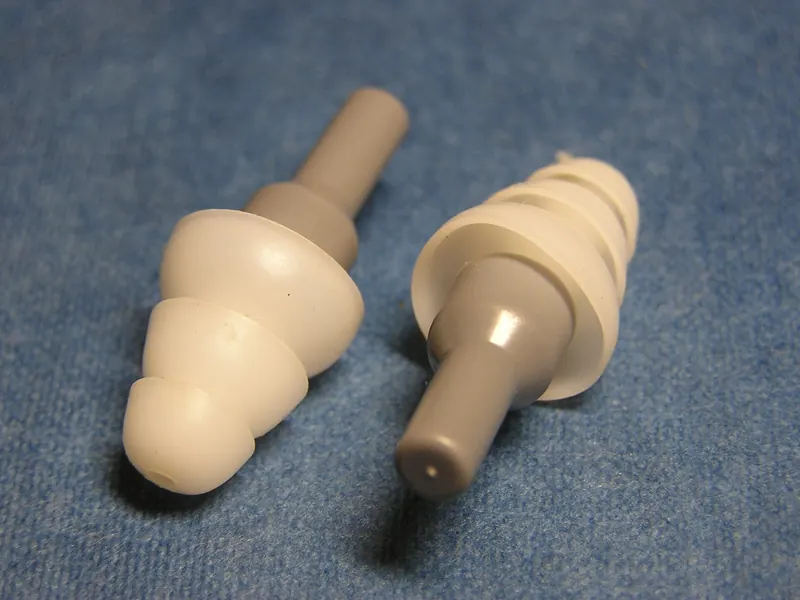
- Reusable musician's earplugs, often sold as "high fidelity", use flat filters that lower the whole sound more evenly, so the mix stays clear, only quieter. HSE advises assuming off-the-shelf plugs protect about 4 dB less than the packet says.
- Custom-molded plugs are made from an impression of your ear, usually through an audiologist, and take a filter: HSE mentions filters of 9, 15 or 25 dB. They give the most even sound, cost the most, and HSE lists DJs among the people they suit.
Even a light filter does a lot: each 3 dB less means half the noise exposure, HSE says, so 9 dB cuts your dose to an eighth.
Wear them while you play
Keeping plugs in is the hard part. In February 2024, Mixmag asked seven DJs who live with tinnitus for advice. Plastician used to take his out a few tracks into a set, because he missed hearing the room: "I wish I could go back now and just learn to get on with it with the protection in."
- Put them in early. SHA SHA KIMBO's tip: "DJ Wheez-ie told me to put my ear protection in while in the taxi on the way to the club so your ears will adjust."
- Practice with them at home. Laksa advises wearing them to mix, at home and at the club: "trust me you can get used to them."
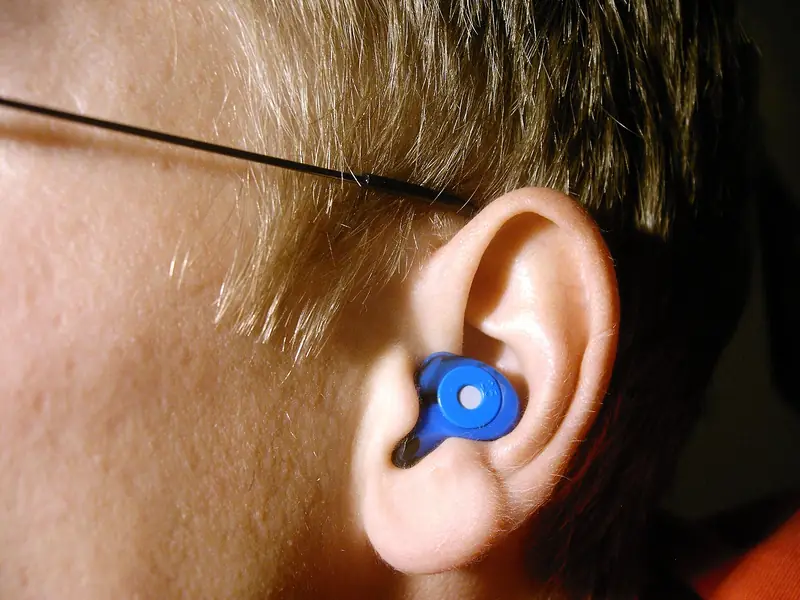
- Fit them properly. The seal is what makes them work, says HSE.
- Carry a spare pair. Plugs get lost in dark booths, so they belong on your gig bag checklist.
Booth monitors and headphones
- Lower the monitors. Turning up rarely makes things clearer, HSE says: start by turning down. Roger Sanchez told Mixmag: "I turn down the monitors when I'm not in a mix and I listen to headphones at a much lower volume than I used to."
- Point them at you. HSE says small monitors close to the performer work especially well for DJs. Ask the sound engineer to aim them at your head.
- Do not fight the room. If you cannot hear your cue, turn the monitor down before you turn the headphones up.
- Choose headphones that seal. WHO advises well-fitted headphones that block outside noise, so you need less volume. Our post on the AlphaTheta HDJ-F9 covers one new model; whatever you buy, check the seal.
- Cueing with one ear? Keep the earplug in the other one.
Breaks and a level check
Ears recover in quiet. HSE says noise during the rest can slow recovery and that performers should move to a quiet area between sets. Step out when another DJ plays, skip loud music on the way home, and leave a quiet day after a big gig when you can.
You cannot judge decibels by ear at 3 a.m. NIOSH's Sound Level Meter app is free on iPhone, measured within 2 dBA in NIOSH's lab tests, and shows your noise dose. It is iOS only: NIOSH cannot yet verify Android apps. Measure where you stand once the night is busy.
Get your hearing tested
Book a test with an audiologist while your ears feel fine, so you have a baseline. WHO advises a yearly check for anyone in a noisy workplace, and its free hearWHO app (iPhone and Android) offers a quick screening in between. Do not wait if:
- Ringing does not go away or comes back after every gig: WHO and the NHS both say persistent tinnitus needs a check.
- Your hearing drops suddenly: NIDCD calls it a medical emergency, so see a doctor immediately.
- Tinnitus comes with sudden hearing loss, facial weakness or vertigo: the NHS says go to the emergency department.
This is general information, not medical advice: your doctor or audiologist knows your ears best.
Your ears are the one piece of gear you cannot replace. When you prepare your next set, play the 30-second previews in any style crate at a sensible volume, save the keepers with the + button, and see how it works to send your crate to your DJ app.
Sources: WHO, WHO safe listening standard, NIOSH, HSE, NIDCD, Mixmag.